
Leadership grows from what you go through. You face hard moments. You make key choices. Then you take what you learn and keep going.
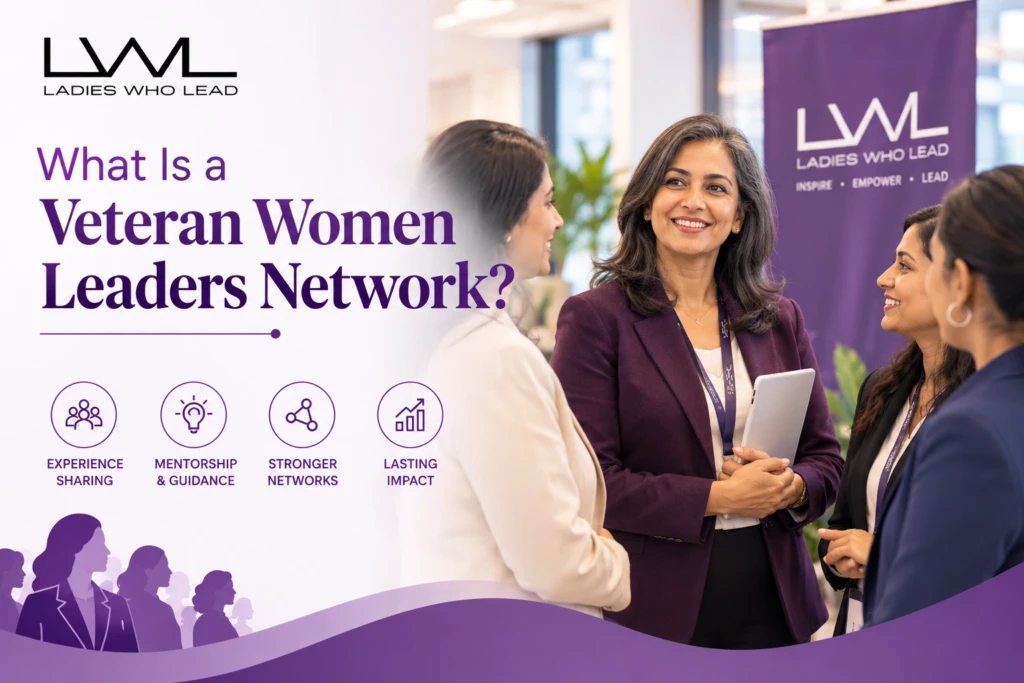
For seasoned women in the workforce, a women veterans leaders network can be a solid place to get support. You can learn from others. You can find a mentor. You can work with peers. You can also form real connections that last.
These groups often include entrepreneurs, executives, founders, consultants, and other experienced women across many fields. People share what they know. They talk through tough situations. They trade practical ideas. They also back one another when things get difficult.
You may also find new working relationships through these communities. Some members build partnerships that turn into ongoing collaboration. And when experienced leaders spend time with newer professionals, it can help show the path forward for the next group of women leaders.
What Is a Veteran Women Leaders Network?
A Veteran women leaders network is a professional community created to connect women with substantial leadership and professional experience. Here, “veteran” generally refers to experience and professional contribution rather than a particular age group.
Members can come from completely different fields. One member might run a growing business, while another may lead a corporate team or work as an independent consultant. Their industries may be different, but they can still share common experiences around leadership, career development, decision-making, and professional challenges.
Such networks create opportunities for experienced women to connect beyond their normal professional circles. A conversation between two leaders from different industries can lead to a fresh business idea, a valuable introduction, a mentoring relationship, or a collaborative project.
Why Is a Women Leaders Network Important?
When professional experience is shared with the right group, it matters more. The Veteran Women Leaders network is one place where experienced women can trade insights, talk through leadership issues, and keep up with what is happening in their fields.
People in the network can pass along real lessons. That can include how to run a team, how to approach negotiations, how to deal with problems at work, or how to handle a career shift. The group also supports members as they build connections. Many women leaders say they feel less alone while they move through their work. They may also hear fresh perspectives, develop relationships based on trust, and meet others who can help with future projects in different industries.
Benefits of Joining a Veteran Women Leaders Network
Joining a professional leadership community can provide several benefits beyond traditional networking.
1. Build Meaningful Professional Connections
Networking becomes more valuable when relationships go beyond exchanging contact details. Experienced women can connect with professionals who share similar goals, values, challenges, or interests.
Regular chats and work events can help people build connections. Those connections often turn out to matter later.
2. Access Mentorship and Guidance
Experienced leaders have often faced situations that cannot be fully explained through courses or books. They have learned from successes, mistakes, unexpected changes, and difficult decisions.
A Veteran women leaders network can create opportunities for members to share these experiences through mentoring and informal conversations.
There is no rule that says mentorship must be a formal programme. Sometimes, a conversation with someone who has already faced a similar challenge can provide useful direction.
3. Discover New Business Opportunities
For women entrepreneurs, networking can be particularly valuable. Business growth often depends on relationships, partnerships, referrals, and access to new ideas.
A professional network can introduce business owners to potential collaborators, service providers, clients, investors, or other entrepreneurs.
However, networking should not be viewed only as a way to generate immediate sales. Relationships that are built over time can provide opportunities over the long term.
4. Exchange Knowledge Across Industries
One of the biggest advantages of a diverse leadership community is the opportunity to learn from people outside your own industry.
A technology entrepreneur may learn something useful from a marketing professional. A finance executive may gain a fresh perspective from a founder. An educator may bring a completely different approach to leadership and communication.
A Veteran women leaders network can bring these different experiences into the same professional space.
Cross-industry conversations can encourage creative thinking and help members look at familiar problems from new perspectives.
How Networking Supports Women in Leadership
Women in leadership often have to balance professional responsibilities with changing expectations and business challenges. A supportive network can provide a space for sharing experiences and learning from others.
Professional communities can also help women increase their visibility. Speaking at events, contributing to discussions, mentoring others, or sharing professional expertise can help established leaders demonstrate their knowledge and experience.
A strong network can therefore support both relationship building and professional development.
It can also remind women that leadership does not follow one fixed path. Some women may build traditional corporate careers, while others may move into entrepreneurship, consulting, board roles, education, or social impact work.
The Role of Mentorship in Women Leadership Networks
Mentorship is one of the best parts of a strong leadership group.
A senior leader can share lessons about managing teams, handling difficult decisions, negotiating professionally, building confidence, or navigating career transitions. These practical insights can be especially useful for women who are entering leadership roles for the first time.
At the same time, mentorship is not limited to older or more experienced professionals teaching younger members. Modern professional communities can encourage two-way learning.
Younger professionals may bring knowledge about emerging technology, digital communication, changing consumer behaviour, and new workplace trends. Experienced leaders can combine these fresh perspectives with their own professional knowledge. When that happens, people can bring their own skills and ideas to the table.
Supporting Women Entrepreneurs Through Networking
Building a business can bring rewards, yet it often feels unpredictable. Business owners regularly make decisions about finances, hiring, marketing, customers, operations, and growth.
Connecting with other experienced professionals can make this journey less isolated.
A Veteran women leaders network can provide opportunities for entrepreneurs to discuss challenges, exchange business ideas, find potential collaborators, and learn from people who have already experienced different stages of professional growth.
Sometimes nothing obvious turns up as a business chance. Still, a real conversation can help you see the issue from a different angle.
Creating Opportunities for Collaboration
Professional networks can create connections that may not happen naturally within a person’s regular workplace or industry.
Imagine a business consultant meeting an experienced founder at a leadership event. Their conversation could lead to a partnership. A marketing professional could meet an entrepreneur who needs branding support. Two women working in different sectors could discover a shared interest in organising a professional workshop.
These possibilities demonstrate why relationship-based networking can be valuable.
The goal is not to force every interaction into a business opportunity. Genuine conversations often create stronger relationships, and opportunities can develop naturally from those relationships.
How Experienced Women Can Support the Next
Generation
Experienced women leaders have something extremely valuable to offer: real-world experience.
Career paths rarely go exactly according to plan. Professionals experience promotions, setbacks, career changes, business challenges, failures, achievements, and unexpected opportunities.
Sharing these experiences can help younger women understand that professional growth is rarely a straight line.
A Veteran women leaders network can connect established leaders with emerging professionals through mentoring, discussions, workshops, and leadership events.
These interactions can help younger women develop confidence while giving experienced leaders an opportunity to contribute to the future of women in leadership.
What Makes a Women Leaders Network Valuable?
The size of a network does not necessarily determine its value. A smaller community with genuine engagement can sometimes create stronger professional relationships than a large network where members rarely interact.
A valuable network should encourage meaningful conversations, knowledge sharing, collaboration, and mutual support.
Members should also be willing to contribute rather than only look for what they can receive. Offering advice, making introductions, sharing knowledge, mentoring another professional, or supporting someone’s initiative can strengthen the entire community.
This is what turns a professional group into a genuine leadership community.
How to Get More Value From a Leadership Network
Joining a network is only the beginning. Active participation is what creates long-term value.
Instead of approaching every event with the goal of promoting yourself or your business, focus on getting to know people. Ask questions, listen to their experiences, and look for common interests.
Follow up after meaningful conversations and stay connected. If someone shares a useful resource or introduction, acknowledge it. If you have expertise that could help another member, offer your perspective.
Over time, these small actions can develop into strong professional relationships.
A Veteran women leaders network works best when members understand that networking is about building relationships rather than collecting contacts.
The Future of Women Leadership Networking
The professional world continues to change, and women are taking on leadership roles across business, technology, finance, education, healthcare, entrepreneurship, and many other fields.
As these opportunities grow, communities that connect experienced and emerging women leaders can become increasingly valuable.
Digital platforms have also made it easier to stay connected beyond physical events. However, technology cannot completely replace genuine relationships. Personal conversations, mentorship, shared experiences, and professional trust continue to matter.
The future of women leadership networking is likely to combine digital connections with meaningful in-person and community-based experiences.
Conclusion
A Veteran women leaders network is more than a professional community. It helps women share knowledge, build meaningful connections, support entrepreneurs, mentor emerging leaders, and discover new opportunities.
For experienced professionals, it offers a space to keep learning and share valuable career lessons. For younger women, it provides practical guidance and inspiration. Ultimately, genuine connections and mutual support help create a stronger community of women leaders.
FAQs
1. What is a Veteran women leaders network?
It is a professional community that connects experienced women leaders for networking, mentorship, knowledge sharing, and collaboration.
2. Who can join a women leaders network?
Experienced professionals, entrepreneurs, executives, founders, and other women leaders may be eligible, depending on the network.
3. What are the benefits of joining?
Members can gain professional connections, mentorship opportunities, knowledge, visibility, and potential collaborations.
4. Can entrepreneurs join these networks?
Yes. Women entrepreneurs can connect with other business owners, professionals, mentors, and potential collaborators.
5. Is mentorship available?
Many leadership networks provide formal or informal mentorship opportunities.
6. Can younger women benefit from experienced leaders?
Yes. They can learn practical lessons about leadership, career development, and professional challenges.
7. Why is cross-industry networking useful?
It introduces members to different perspectives, ideas, expertise, and potential collaborations.
8. How can members contribute?
Members can mentor others, share expertise, make introductions, attend events, and support fellow professionals.
9. Is networking only about business?
No. It can also provide learning, community, professional development, and meaningful relationships.
10. What makes a leadership network successful?
Active participation, genuine connections, knowledge sharing, mutual support, and meaningful interactions make a network valuable.