
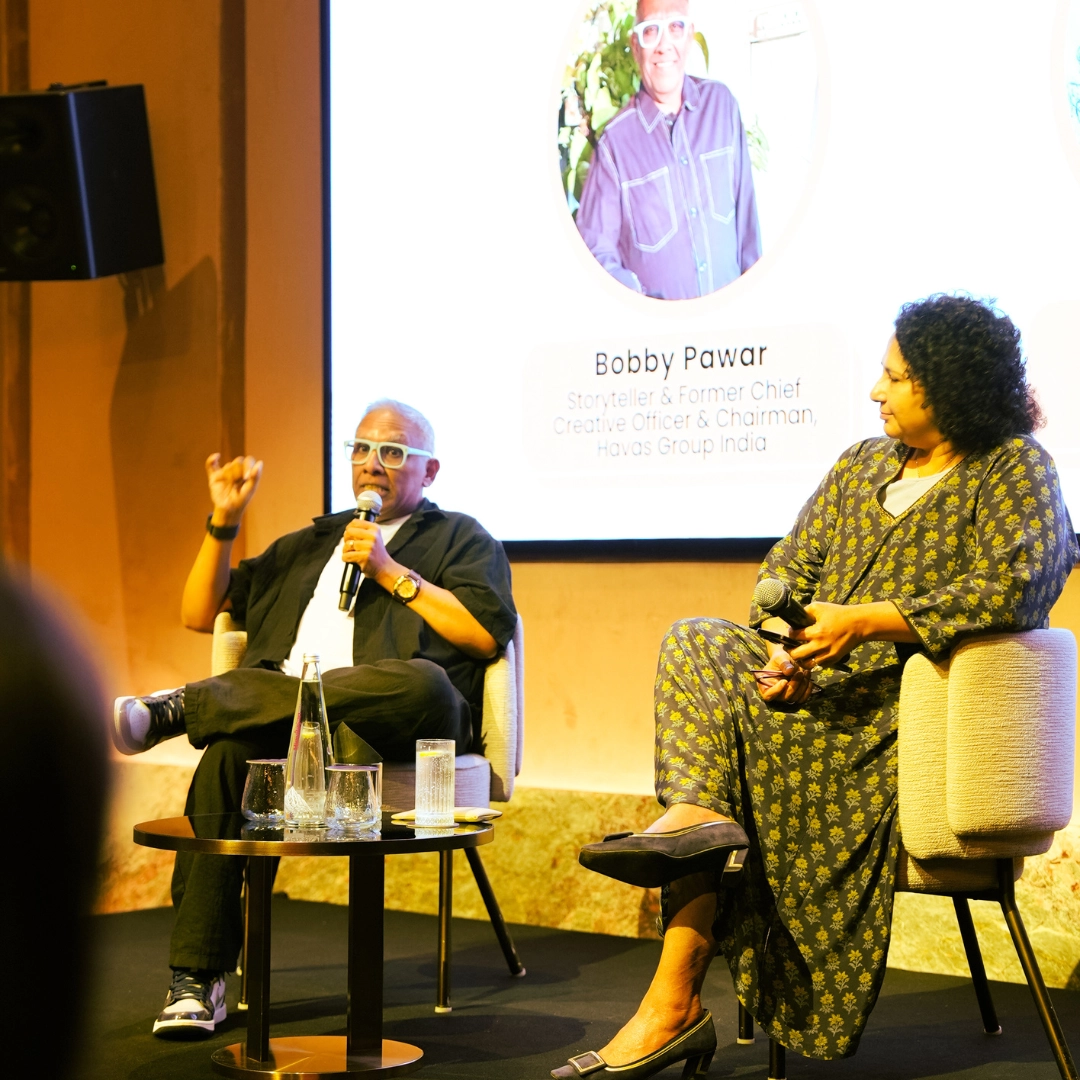
Bobby Pawar, former Chairman and Chief Creative Officer at Havas Group India and one of the most awarded creative leaders in Indian advertising, has spent over three decades shaping how brands communicate culture, emotion and business value. Across leadership roles at Havas, Publicis, JWT and DDB Mudra, his work for brands like Pepsi, Nokia, Jaguar, American Express and Maggi has earned over 500 global awards, been featured at the Museum of Modern Art and aired during the Super Bowl.
At a recent Mentor Session in Mumbai, members joined Bobby for a candid conversation on creativity, persuasion, AI, brand-building and why most businesses misunderstand storytelling entirely.
𝗖𝗿𝗲𝗮𝘁𝗶𝘃𝗶𝘁𝘆 𝗜𝘀 𝗡𝗼𝘁 𝗔𝗿𝘁. 𝗜𝘁 𝗜𝘀 𝗣𝗿𝗼𝗯𝗹𝗲𝗺 𝗦𝗼𝗹𝘃𝗶𝗻𝗴.
Bobby challenged the long-held assumption that creativity and strategy exist as separate disciplines.
“Logic plus magic equals creativity.”
The core insight was simple – creativity is not the opposite of logic. In fact, the strongest creative work is usually rooted in an extremely clear understanding of the problem being solved.
For founders, entrepreneurs, and professionals in the room, this reframed creativity as a commercially valuable capability rather than a “nice to have.” Whether it is fundraising, hiring, negotiation, product positioning or customer acquisition, the businesses that stand out are often the ones that communicate ideas in ways people emotionally remember.
The discussion also challenged the assumption that only “creative people” are creative. Bobby repeatedly returned to the idea that creativity already exists in how people persuade, adapt, negotiate and navigate relationships every day. The difference is whether that instinct is consciously developed.
𝗗𝗮𝘁𝗮 𝗖𝗮𝗻 𝗦𝗵𝗼𝘄 𝗣𝗮𝘁𝘁𝗲𝗿𝗻𝘀. 𝗜𝘁 𝗖𝗮𝗻𝗻𝗼𝘁 𝗙𝘂𝗹𝗹𝘆 𝗘𝘅𝗽𝗹𝗮𝗶𝗻 𝗣𝗲𝗼𝗽𝗹𝗲.
A major part of the session focused on the growing overdependence on data in business decision-making.
“People make decisions with their heart and rationalise with their head.”
The conversation unpacked why behavioural data often explains what consumers are doing, but struggles to explain why they behave that way emotionally or culturally.
This became especially relevant in the context of Indian consumers, where aspiration, insecurity, identity and emotional memory often shape decision-making as much as functionality or price.
Bobby spoke extensively about insight as something deeper than information. Insight comes from observation, emotional understanding and proximity to real people. It is built through conversations, lived experiences and noticing tensions others overlook.
For many members in the room, this became a sharp reminder that dashboards and analytics cannot replace human understanding.
𝗔𝗜 𝗪𝗶𝗹𝗹 𝗥𝗲𝗽𝗹𝗮𝗰𝗲 𝗔𝘃𝗲𝗿𝗮𝗴𝗲 𝗪𝗼𝗿𝗸. 𝗡𝗼𝘁 𝗢𝗿𝗶𝗴𝗶𝗻𝗮𝗹 𝗧𝗵𝗶𝗻𝗸𝗶𝗻𝗴.
The conversation also explored the growing impact of AI on creativity and storytelling.
“If you’re mediocre, AI will replace you.”
Rather than framing AI as a threat to creativity itself, Bobby positioned it as a threat to repetitive and predictable thinking.
AI can generate outputs quickly because it is trained on existing patterns. But imagination, instinct, emotional judgement and originality still remain deeply human capabilities.
The larger insight here was that AI may actually increase the value of people who think independently and bring strong perspective, taste and emotional depth into their work.
As content becomes easier to generate, differentiation may increasingly come from the quality of thinking behind it.
𝗜𝗻𝘁𝗲𝗿𝗲𝘀𝘁𝗶𝗻𝗴 𝗕𝗿𝗮𝗻𝗱𝘀 𝗔𝗿𝗲 𝗨𝘀𝘂𝗮𝗹𝗹𝘆 𝗕𝘂𝗶𝗹𝘁 𝗕𝘆 𝗜𝗻𝘁𝗲𝗿𝗲𝘀𝘁𝗶𝗻𝗴 𝗣𝗲𝗼𝗽𝗹𝗲.
One of the strongest recurring themes throughout the evening was curiosity.
Bobby spoke about how books, films, poetry, overheard conversations, humour, relationships and everyday observation all become raw material for storytelling and creative thinking.
“You cannot be interesting if you are not interested.”
The conversation explored why many brands today feel performative despite having strong budgets and visibility. Businesses often imitate trends, formats and language without understanding whether it genuinely aligns with who they are.
Consumers recognise that disconnect quickly.
Strong storytelling, according to Bobby, comes less from trying to appear clever and more from having a clear point of view rooted in genuine observation and emotional honesty.
𝗦𝘁𝗼𝗿𝘆𝘁𝗲𝗹𝗹𝗶𝗻𝗴 𝗜𝘀 𝗨𝗹𝘁𝗶𝗺𝗮𝘁𝗲𝗹𝘆 𝗔𝗯𝗼𝘂𝘁 𝗣𝗲𝗿𝘀𝘂𝗮𝘀𝗶𝗼𝗻.
Throughout the session, storytelling was framed not as communication, but as persuasion.
“Nobody wants to buy your great idea. They want to buy something that sells.”
For founders in particular, this became highly relevant in the context of fundraising, leadership visibility and pitching.
Investors, teams and consumers are rarely evaluating only the product or the idea itself. They are also evaluating conviction, clarity, emotional resonance and the person communicating it.
The conversation unpacked why many strong ideas fail simply because they are presented poorly or without emotional context. Logic creates understanding. Storytelling creates belief.
Across the session, one theme remained consistent. In increasingly crowded markets, the brands and leaders who stand out will not necessarily be the loudest. They will be the ones who understand people most deeply and communicate that understanding with clarity, originality and emotional precision.